Product Description
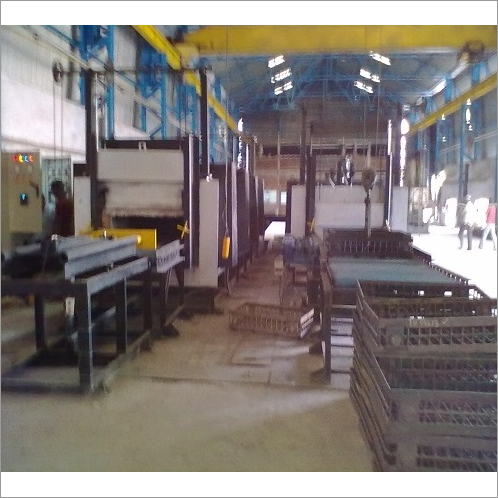
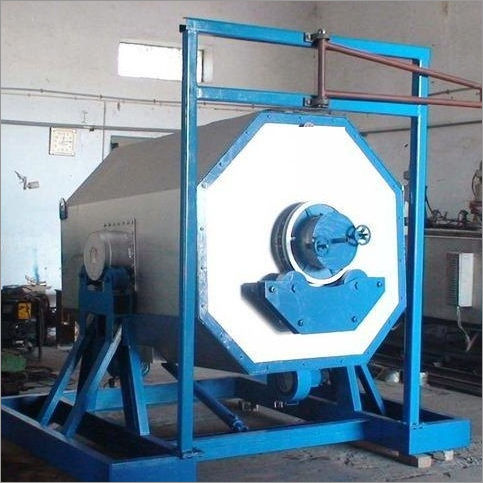
Pusher Type Hardening Tempering Furnace is suitable for execution of annealing, stress relieving, normalizing and iso thermal annealing based heat treatment procedures. This furnace is mainly used for heat treatment of jewelries and hardware accessories. This furnace is equipped with mechanical transmission section where ambient internal temperature is maintained for storage of protective gas. The purification section of this Pusher Type Hardening Tempering Furnace is used for production of nitrogen by decomposing ammonia. Available with three phase power supply facility, this furnace can maintain up to 1000 degree C operating temperature. Long working life, low maintenance design and ergonomic look are the key aspects of this furnace.
Technical Specification
|
Frequency
|
50/60 Hz
|
|
Material
|
Stainless Steel / Mild Steel
|
|
Brand
|
Velocity
|
|
Voltage
|
220 - 280 V
|
|
Power Source
|
Electric
|
Efficient Continuous Heat TreatmentThis pusher type furnace is designed for the non-stop heat treatment of metal parts, guaranteeing consistent hardening and tempering. Its automated pusher system and modular design streamline workflow, minimize handling, and optimize throughput for demanding industrial settings, ensuring productivity and efficiency.
Precision Control and High Temperature CapabilityWith advanced PLC-based controls, operators can achieve precise temperature regulation up to 1100C within the multi-zone chamber. This level of control enhances the uniformity of treated parts, critical for products requiring stringent quality and mechanical properties.
Customizable and Robust Industrial SolutionManufactured from durable stainless or mild steel, the furnace supports heavy-duty, high-volume operations. Its customizable dimensions allow integration into various production lines, making it flexible for different project scales and specialized applications.
FAQ's of Pusher Type Hardening Tempering Furnace:
Q: How does the pusher type mechanism improve the furnace's efficiency?
A: The automated pusher mechanism continuously moves parts through the furnace, ensuring uniform exposure to heat and streamlining loading and unloading processes, which results in higher throughput and energy efficiency compared to batch-type furnaces.
Q: What is the hardening and tempering process in this furnace?
A: The hardening process involves heating metals to a designated temperature to alter their microstructure for increased hardness, while tempering reheats the material to a lower temperature to enhance ductility and reduce brittleness. The multi-zone, PLC-controlled furnace automates these steps for reliable, repeatable outcomes.
Q: When should I use a pusher type hardening tempering furnace?
A: This furnace is ideal when your operation requires continuous, high-volume heat treatment for metal components, such as in automotive, tool manufacturing, or heavy industrial sectors, where consistency and efficiency are paramount.
Q: Where can this furnace be installed and is it suitable for all industries?
A: The furnace can be installed in industrial manufacturing units with suitable electric supply and exhaust systems. It is most suited for industries needing large-scale hardening and tempering, including steel plants, engineering works, and foundries.
Q: What are the advantages of the PLC-based control system in this furnace?
A: The PLC-based system enables accurate monitoring and control over temperature, conveyor speed, and process sequences, leading to tight quality assurance, reduced human error, and optimized operational efficiency.
Q: How is the size and capacity of the furnace determined?
A: Size and capacity are tailored according to your production requirements. The modular design allows for customized dimensions, ensuring the furnace integrates seamlessly with existing workflows and meets specific output targets.
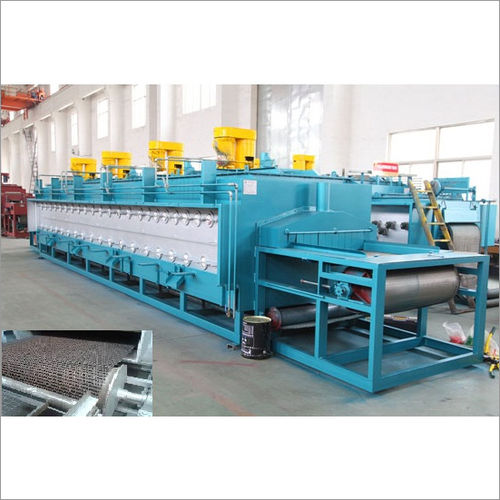
Q: What benefits can users expect from the mesh conveyor and multi-zone chamber design?
A: The mesh conveyor facilitates smooth, continuous transport of parts, while the multi-zone chamber allows precise temperature profiling at various stages. This design delivers consistent product quality and minimizes processing time.






 Send Inquiry
 Send Inquiry
 Send SMS